
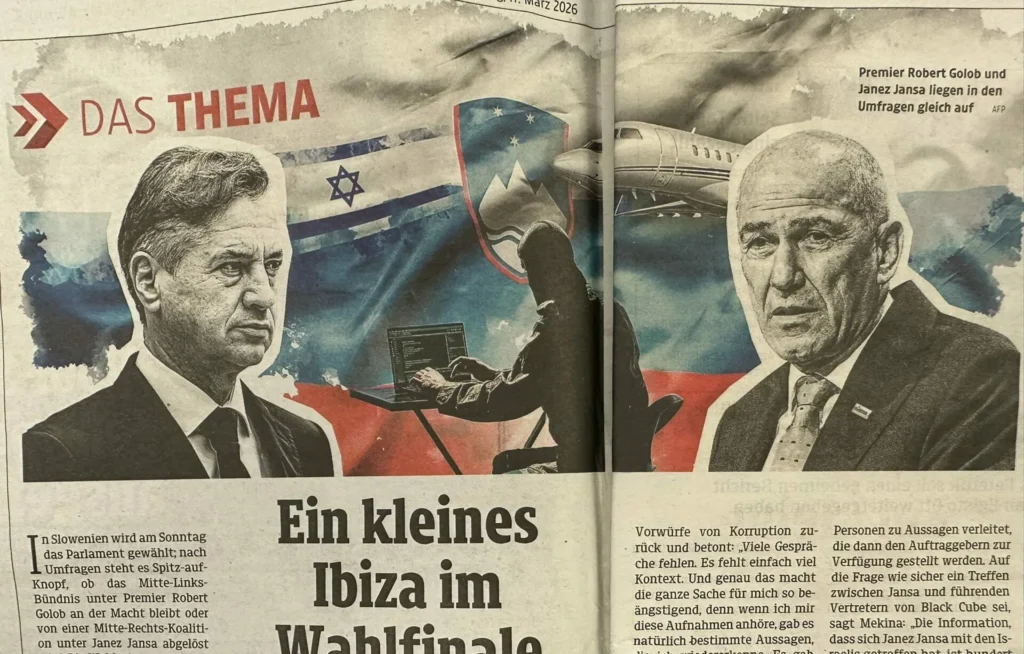
In the light of wiretaps and leaked video recordings that reveal corruption, clientelism and the untouchability of left-wing political elites, an inevitable parallel presents itself from neighbouring Austria – the Ibiza affair. Not merely as a scandal, but as a mirror of political culture and institutional response that can be compared with Slovenia. Austrian media, including Kleine Zeitung, are today drawing a direct comparison between the current Slovenian corruption scandal and the notorious “Ibiza” case, which in 2019 brought down the Austrian government. The message of this comparison is clear and uncomfortable for Slovenia: developed democracies punish corruption, not those who expose it.
When the secretly recorded video was published on 17 May 2019 in the German media Der Spiegel and Süddeutsche Zeitung, it triggered a political earthquake. The footage, shot back in July 2017 in a luxury villa on Ibiza, captured a conversation between then Austrian Vice-Chancellor Heinz-Christian Strache and his close associate Johann Gudenus with a woman who presented herself as the niece of a Russian oligarch. In reality, it was a carefully staged trap by an undercover operative who knew exactly how to set the bait.
The recording exposed corruption, a sense of impunity and clientelism – exactly as the Slovenian wiretaps have exposed corruption among those in power, the theft of public money and the untouchability of “Mr Ten Percent” (Zoran Janković). The difference between the Austrian and Slovenian affairs, however, is more than obvious.
The consequences were brutal
In Austria the fallout was immediate and ruthless. On 18 May 2019, Strache and Gudenus resigned. Strache publicly admitted that his behaviour had been “stupid, irresponsible and a mistake.” But political accountability did not stop with individuals. Then-Chancellor Sebastian Kurz dissolved the ÖVP–FPÖ coalition and called early elections. The government finally fell on 27 May 2019 after a vote of no confidence.
The key question that arises is not only the content of the affair, but the reaction of the media, society and politics. In Austria the focus was never on who had done the recording. The emphasis was on what the recording revealed: the willingness of the highest representatives of power to trade away the state.
And it is precisely here that the comparison with Slovenia almost suggests itself. When revelations emerge, the primary discussion is not about the substance – possible corruption, abuse of public funds or political impunity – but about the source of the information. Who recorded it, who passed it on, who is behind it.
S. K.
